
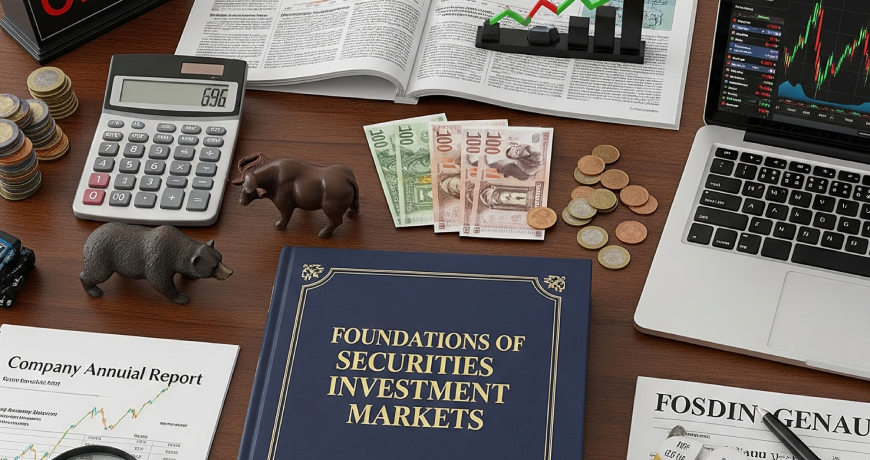
The securities and investment markets form the backbone of modern financial systems. They provide a structured environment where individuals, companies, and governments can raise capital, trade assets, and manage risk. Understanding the foundations of these markets is essential for anyone who wishes to participate in them, whether as an investor, policymaker, or financial professional.
At their core, securities markets exist to connect those who need capital with those who have surplus funds to invest. Businesses often require financing to expand operations, develop new products, or enter new markets. Governments also raise money to fund infrastructure and public services. On the other side, investors such as individuals, institutions, or pension funds seek opportunities to grow their wealth. The securities market acts as the meeting point, creating efficiency, liquidity, and transparency in the transfer of funds.
Securities represent tradable financial instruments, and they fall broadly into two categories: equity and debt. Equity securities, commonly referred to as shares or stocks, give investors ownership in a company and a claim on its future profits. Debt securities, such as bonds, represent a loan made by the investor to a corporation or government, which promises to repay the principal along with periodic interest. Beyond these, there are hybrid instruments and derivatives, which derive their value from underlying assets. Collectively, these securities provide diverse options for investors to match their risk appetite and financial objectives.
Investment markets can be divided into primary and secondary segments. In the primary market, securities are created and sold for the first time, usually through mechanisms such as initial public offerings (IPOs) or bond issuances. This allows issuers to raise new capital directly from investors. Once securities have been issued, they are traded in the secondary market, which includes stock exchanges and over-the-counter platforms. The secondary market is vital because it provides liquidity investors know they can buy and sell securities relatively easily, which increases their willingness to invest in the first place.
The operation of securities markets involves a wide range of participants. Issuers include corporations and governments that create securities to raise funds. Investors can be individuals, institutional investors such as pension funds or insurance companies, and increasingly, algorithmic trading systems. Intermediaries such as brokers, investment banks, and asset managers facilitate transactions, while regulators oversee market conduct and enforce transparency. The interaction between these participants shapes the efficiency and stability of the markets.
Because securities markets handle vast sums of money and influence economies worldwide, regulation is essential. Regulatory bodies such as the U.S. Securities and Exchange Commission (SEC) or the UK’s Financial Conduct Authority (FCA) establish rules that protect investors and ensure fairness. Disclosure requirements force issuers to provide accurate and timely information, reducing the risk of misinformation. Regulation also addresses issues like insider trading, fraud, and systemic risk. Effective regulation fosters trust, without which investment markets cannot function properly.
In recent decades, securities and investment markets have been transformed by globalization and technology. Capital now flows across borders more freely than ever, enabling investors to diversify internationally and companies to access funding from global investors. Technology has accelerated trading, with electronic platforms and algorithmic systems executing millions of transactions in fractions of a second. While these developments have increased efficiency and accessibility, they also pose challenges in terms of oversight, cybersecurity, and market volatility.
One of the most fundamental principles in investment markets is the relationship between risk and return. Investors expect higher returns when they take on greater risk, whether through equities, emerging market bonds, or complex derivatives. Understanding this trade-off is critical to sound decision-making. Diversification, the practice of spreading investments across various asset classes, remains one of the most effective strategies for managing risk while still pursuing returns. This principle underpins much of modern portfolio theory and is central to long-term investment success.
Market efficiency refers to how quickly and accurately securities prices reflect all available information. In highly efficient markets, opportunities for easy profit are limited because prices already incorporate relevant data. However, inefficiencies do exist, often creating opportunities for active traders to seek excess returns. Whether a market is perfectly efficient or not remains a matter of debate, but the concept continues to guide investment strategies and academic research.
The foundations of securities and investment markets rest on the interaction of issuers, investors, intermediaries, and regulators within an environment that balances risk, return, and trust. These markets are essential for economic growth, as they enable capital formation and wealth creation on a global scale. For participants, understanding how securities are issued, traded, and regulated provides a strong base for making informed decisions. As technology and globalization continue to reshape the landscape, the fundamental principles remain the same: markets thrive on transparency, efficiency, and the confidence of those who use them



0 comments